
Beware of Parking Scam AZ-26-TR-273196
If you’ve received a message, email, or document that looks like a “FINAL COURT-ORDERED MANDATORY COLLECTION NOTICE” — stop right there.
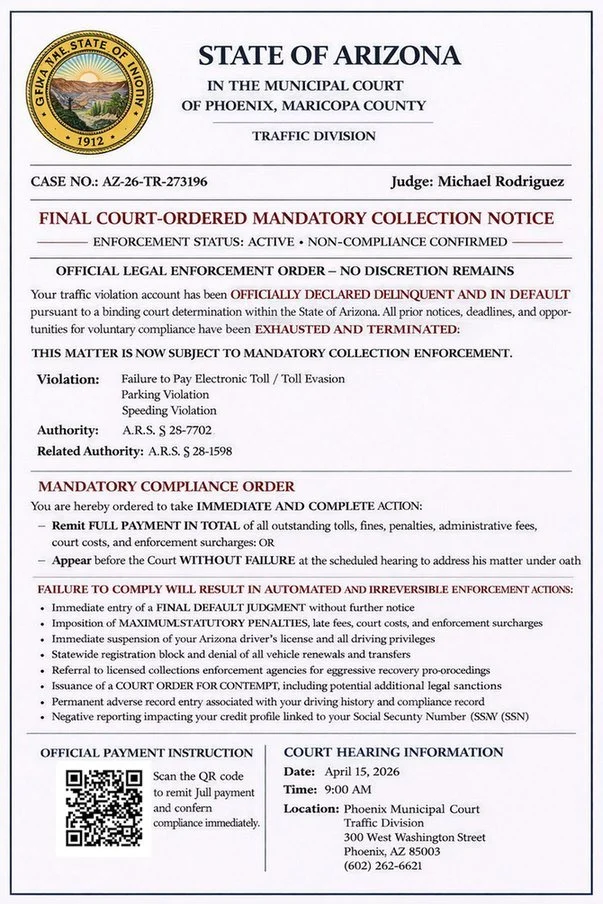
SCAM ALERT!
Do not pay this fake notice
Do not scan the QR code
Do not click on any links
It’s a scam.
Cybercriminals are actively targeting Arizona residents with fake notices designed to scare you into paying immediately or giving up personal information. These messages often look official, include court language, and even display QR codes to make them feel legitimate.
Why This Is a Scam
According to the Arizona Department of Transportation (ADOT):
ADOT does NOT collect unpaid traffic tickets
They will NEVER text you demanding payment
Scam messages often:
Use urgent threats (license suspension, court action)
Include fake agencies like “Arizona Ministry of Communications”
Contain suspicious links or QR codes
Use incorrect terminology (e.g., “DMV” instead of Arizona’s MVD)
This type of attack is known as “smishing” — a form of phishing via text message.
Red Flags in the Fake Notice
Here’s what gives it away:
Urgency & Fear Tactics
“FINAL NOTICE”
“NO DISCRETION REMAINS”
“IMMEDIATE ACTION REQUIRED”
Real government agencies don’t pressure you like this.
QR Codes for Payment
Directs you to “scan to pay immediately.” Legitimate courts don’t use random QR codes for enforcement payments.
Over-the-Top Legal Language
Excessive threats designed to get you to panic and acting fast like:
Credit score damage tied to SSN
Immediate suspension of license
“Irreversible enforcement actions”
Generic or Inconsistent Details
Fake judge names
Incorrect agencies
Missing official court references you can verify
What You Should Do
If you receive one of these messages:
✅ DO:
“Report Spam” in iMessage or Android messaging app
Delete the message immediately
Report it to your organization’s IT/security team
Verify directly with the court or agency using official websites
Educate your staff or family (these scams spread fast)
❌ DON’T:
Click links
Scan QR codes
Enter personal or payment information
Reply to the sender
Why This Scam Works and Why It’s Dangerous
Attackers are exploiting:
Fear of legal consequences
Authority (government branding)
Urgency (act now or else)
This is classic social engineering — and it works because it feels real.